
Exhibiting stone materials such as marble, granite, quartz, and engineered surfaces presents a unique set of challenges.
These materials are not only heavy and difficult to handle, but they also rely heavily on visual and tactile appeal. Buyers often evaluate finish, texture, color variation, and application potential before making decisions.
This makes exhibition design in the stone industry a careful balance between safety, accessibility, and presentation.
This article explores how to display heavy materials in a way that is both secure and engaging for visitors.
Understanding the Nature of Stone Exhibitions
Stone industry exhibitions attract architects, interior designers, builders, and distributors.
Visitors are typically looking for:
- Surface finish and texture
- Color consistency and variation
- Application suitability
- Durability and quality
Unlike lightweight product categories, stone displays require physical interaction. Visitors often want to touch, compare, and closely inspect materials.
This makes display planning a critical part of the exhibition strategy.
Prioritize Structural Safety from the Start
Safety is the foundation of any stone exhibition setup.
Stone slabs and blocks are heavy and can pose risks if not properly supported. Structural planning should be considered at the design stage, not as an afterthought.
Key considerations include:
- Using reinforced display structures designed for load-bearing
- Securing slabs with proper anchoring systems
- Ensuring stability even during high visitor interaction
All structures should be tested for weight tolerance and balance before the exhibition begins.
Choose Display Formats Based on Material Type
Different formats work better for different types of stone products.
Common display approaches include:
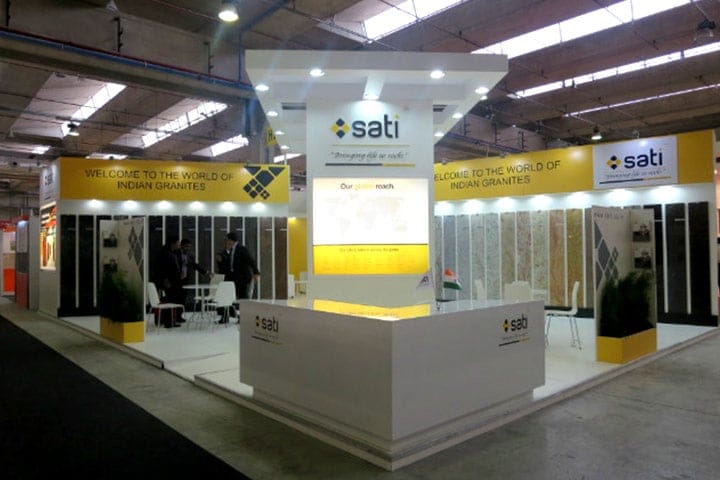
- Vertical slab displays for full-size materials
- A-frame or rack systems for multiple slabs
- Tabletop displays for smaller samples
Each format should allow visitors to view the material clearly without compromising stability.
The choice of format should also consider how easily visitors can approach and interact with the material.
Enable Safe and Comfortable Interaction
Interaction is essential in the stone industry, but it needs to be controlled.
Visitors should be able to:
- Touch and feel surfaces
- View edges and thickness
- Compare finishes
At the same time, the setup should prevent accidental movement or tipping.
This can be achieved by:
- Limiting how slabs can be accessed or moved
- Providing guided interaction where needed
- Ensuring adequate spacing between displays
A well-designed setup allows interaction without introducing risk.
Use Lighting to Enhance Material Appeal
Lighting plays a significant role in how stone materials are perceived.
Proper lighting can highlight:
- Natural patterns and veining
- Surface finishes such as polished or matte
- Depth and texture
It is important to avoid uneven or overly harsh lighting, as it can distort the appearance of the material.
Consistent and well-placed lighting helps visitors evaluate the product more accurately.
Balance Density with Clarity
Stone exhibitions often involve a wide range of materials.
However, displaying too many slabs in a limited space can create visual clutter and reduce impact.
A more effective approach is to:
- Curate a selection of key materials
- Space them out for better visibility
- Use catalogs or digital displays to showcase the full range
This ensures that each material receives the attention it deserves.
Support Displays with Application Context
Visitors often want to understand how a material will look in real-world applications.
This can be supported through:
- Mockups of kitchens, walls, or flooring
- Installed sample panels
- Visual references showing completed projects
Providing context helps visitors move from evaluation to imagination, which can influence decision-making.
Integrate Clear and Minimal Information
Information should support the display, not overwhelm it.
Useful details to include are:
- Material name and type
- Finish and thickness
- Key properties or applications
Keeping this information concise and well-placed ensures that visitors can quickly understand what they are viewing.
Plan Logistics and Handling Carefully
The success of a stone exhibition stall depends heavily on execution.
Important factors include:
- Transportation and unloading of heavy materials
- Safe installation processes
- On-site handling equipment if required
Planning these aspects in advance reduces risk and ensures a smoother setup.
Design for Durability Throughout the Event
Stone displays need to withstand continuous interaction over multiple days.
This requires:
- Durable display structures
- Stable positioning
- Regular checks to ensure everything remains secure
A well-maintained display continues to perform consistently throughout the event.
Create Space for Discussion and Decision-Making
Stone selection often involves detailed discussions.
Providing a dedicated space for conversations allows:
- Architects and buyers to review options
- Teams to discuss specifications and pricing
- More focused engagement away from display areas
This supports the transition from interest to decision.
Closing Thoughts
Displaying heavy materials in the stone industry requires a thoughtful approach that goes beyond aesthetics.
When safety, accessibility, and presentation are aligned, the exhibition space becomes more effective for both the brand and the visitor.
A well-planned display not only protects the material and the audience but also enhances how the product is experienced and understood.
In a category where visual and tactile evaluation are key, this balance plays an important role in shaping perception and driving engagement.