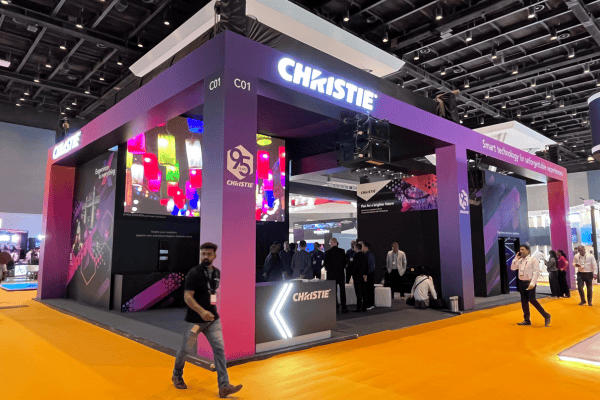
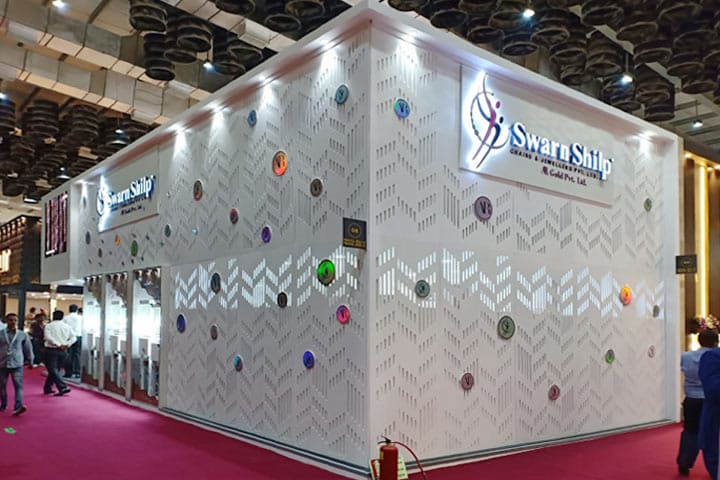
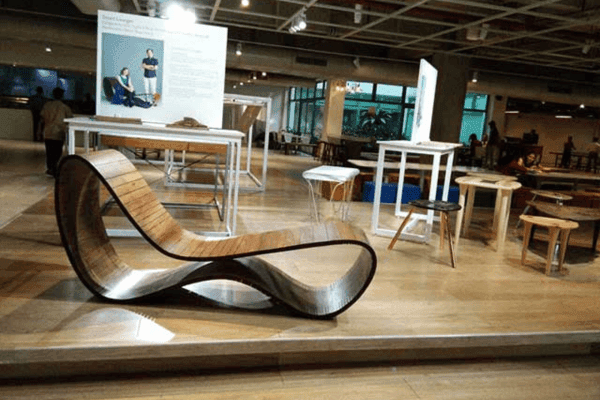
In architecture and building material exhibitions, the product is not just seen. It is evaluated. Visitors are not browsing casually.
They are:
- Comparing finishes
- Assessing quality
- Visualizing applications
- Making shortlists for real projects
In this context, how you display your material directly impacts how it is perceived.
A poorly presented material can feel average. The same material, when displayed thoughtfully, can feel premium, reliable, and specification-ready.
The Shift From Catalog Display to Experience-Led Display
Traditional booths often rely on volume.
Multiple samples, stacked panels, and dense displays meant to show variety.
While this communicates range, it often creates confusion.
The shift today is towards experience-led display, where:
- Fewer materials are highlighted
- Each display has a clear purpose
- Visitors can engage, not just observe
Instead of showcasing everything, brands are focusing on showcasing what matters most.
Technique 1 Display Materials in Real-World Context
One of the most effective ways to present materials is to show them in application.
Instead of isolated samples, create:
- Wall sections
- Flooring setups
- Facade simulations
- Bathroom or kitchen mockups
This helps visitors immediately understand:
- Scale
- Finish in real lighting
- Practical use
For architects and designers, this reduces the mental effort of imagining how the material will look in a real space.
Technique 2 Use Vertical and Framed Displays
Flat sample tables often get overlooked. Vertical displays, on the other hand, create visibility and structure.
Framed presentations:
- Give importance to each material
- Create a gallery-like feel
- Improve visual hierarchy
This works especially well for surfaces like laminates, tiles, veneers, and stone. When a material is framed and spaced correctly, it feels more intentional and premium.
Technique 3 Allow Tactile Interaction
In material-focused industries, touch is as important as sight.
Visitors want to:
- Feel texture
- Check thickness
- Understand finish quality
Make materials easily accessible. Avoid barriers that prevent interaction.
Open displays, sample pull-outs, and touch-friendly setups encourage engagement and make the experience more memorable.
Technique 4 Control Lighting for Accurate Representation
Lighting can completely change how a material looks. Harsh or uneven lighting can distort color and texture.
Effective lighting design should:
- Highlight surface details
- Maintain color accuracy
- Avoid glare and reflection
Use focused lighting for key displays and softer ambient lighting for the overall space. This ensures that materials are seen as they would appear in real applications.
Technique 5 Create Zoning Based on Use Cases
Instead of grouping materials randomly, organize them based on application.
For example:
- Residential use
- Commercial use
- Outdoor applications
- High-traffic areas
This helps visitors navigate the booth more intuitively.
It also allows your team to have more contextual conversations rather than generic product discussions.
Technique 6 Highlight Fewer, Stronger Options
Trying to display your entire catalog often weakens the overall impact.
A better approach is to:
- Curate top-performing or new collections
- Highlight innovations
- Showcase best-use examples
This creates clarity.
Visitors remember specific materials instead of feeling overwhelmed by too many options.
Technique 7 Integrate Digital Support Without Overdependence
Digital screens can support material display, but they should not replace physical interaction.
Use screens to:
- Show installation processes
- Display large-scale applications
- Present case studies
But ensure that the core experience remains physical.
In architecture and design, real material interaction builds more confidence than digital visuals alone.
Technique 8 Maintain Clean and Consistent Detailing
Presentation quality affects perception.
Uneven edges, poor mounting, or inconsistent finishes can reduce trust.
Pay attention to:
- Alignment
- Edge finishing
- Mounting quality
- Consistent spacing
When details are executed well, it reflects the quality of the material itself.
Technique 9 Design for Movement and Discovery
A good material display is not static. It guides the visitor through the space.
Create a flow where:
- Each section leads to the next
- Key displays act as visual anchors
- Visitors naturally explore different materials
This increases engagement time and improves the overall experience.
Final Thoughts
Material display at trade fairs is not about showing more. It is about showing better.
For architecture and building material brands, the goal is to make materials:
- Easy to understand
- Easy to experience
- Easy to remember
When display techniques are aligned with how architects, designers, and decision-makers evaluate materials, the booth becomes more than a showcase.
It becomes a space where decisions begin to take shape