Why Luxury Booth Design Requires a Different Approach
Luxury brands do not compete on visibility alone. They compete on perception.
In an exhibition environment, where multiple brands are trying to attract attention, luxury brands face a unique challenge.
They need to stand out without appearing loud.
They need to attract without appearing accessible to everyone.
They need to communicate value without over-explaining it.
This is where booth design plays a critical role.
For luxury brands, the booth is not just a display space. It is an extension of the brand experience.
Premium Is Communicated Through Restraint
One of the most important principles in luxury booth design is restraint.
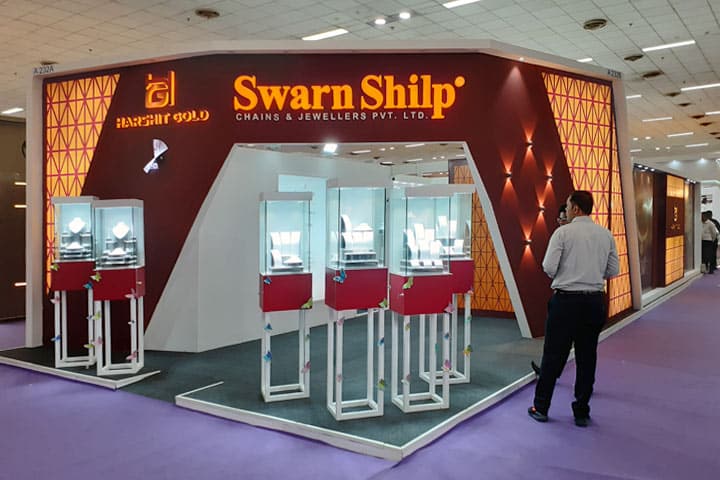
Instead of showcasing the entire product range, luxury booths focus on:
- Curated displays
- Limited but impactful products
- Clean and uncluttered layouts
When everything is highlighted, nothing feels special.
Luxury spaces guide attention and create focus.
They allow each product to be experienced individually rather than competing for visibility.
Material Selection Reflects Brand Value
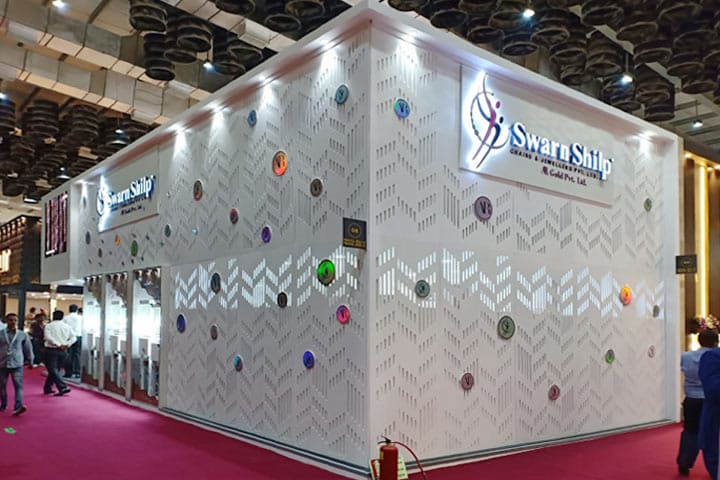
In luxury booths, materials are not just functional. They are expressive.
The choice of materials directly influences how the brand is perceived.
Common approaches include:
- High-quality finishes with depth and texture
- Natural materials that feel authentic
- Consistency across all surfaces
Avoiding overly artificial or mass-produced finishes is important.
Visitors often associate material quality with product quality.
Lighting That Creates Mood, Not Just Visibility
Lighting in luxury booths is less about brightness and more about atmosphere.
Well-designed lighting:
- Highlights product details
- Creates contrast and depth
- Guides attention subtly
Warm, focused lighting works better than uniform illumination.
It creates a more intimate and refined environment, encouraging visitors to slow down and engage.
Creating Controlled Entry and Movement
Unlike mass-market booths, luxury spaces are not always fully open.
They often use:
- Defined entry points
- Semi-private layouts
- Guided pathways
This creates a sense of exclusivity.
Visitors feel like they are entering a curated environment rather than walking into an open display.
At the same time, the space should not feel intimidating. The balance between openness and control is key.
Designing for Experience, Not Just Display
Luxury is experienced, not explained.
Booths should be designed to:
- Encourage exploration
- Allow closer interaction with products
- Support meaningful conversations
This could include:
- Dedicated interaction zones
- Lounge-style seating areas
- Personalized product walkthroughs
The goal is to create an environment where visitors can engage at their own pace.
Subtle and Integrated Branding
Luxury brands do not rely on aggressive branding.
Instead of large logos and bold placements, they use:
- Minimal and well-placed branding
- Consistent typography and color palette
- Integration within the overall design
The space itself communicates the brand.
Branding supports the experience rather than dominating it.
Attention to Detail at Every Level
In luxury design, details are not small. They are everything.
Visitors may not consciously notice every element, but they feel the difference.
Attention should be given to:
- Joinery and finishing
- Alignment and symmetry
- Quality of fixtures and fittings
Even minor inconsistencies can reduce the perception of luxury.
Consistency and precision reinforce trust.
Creating a Calm and Unhurried Environment
Exhibitions are often busy and chaotic.
Luxury booths create contrast by offering a calmer experience.
This can be achieved through:
- Open space and breathing room
- Controlled lighting and sound
- Comfortable seating
When visitors feel relaxed, they are more likely to engage deeply with the brand.
Aligning the Booth With Brand Identity
A luxury booth should feel like a natural extension of the brand, not a temporary setup.
The design language, materials, and overall experience should reflect:
- The brand’s positioning
- Its target audience
- Its product philosophy
Consistency between the booth and the brand builds credibility.
Final Thoughts
Designing booths for luxury product brands is not about adding more elements. It is about making deliberate choices.
The most effective luxury booths:
- Focus on curation rather than volume
- Use materials and lighting thoughtfully
- Create controlled yet inviting environments
- Pay attention to every detail
In a space where many brands try to attract attention, luxury brands stand out by doing less, but doing it exceptionally well.
That is what turns a booth into a true brand experience.