But that has changed.
Today, even in sectors like manufacturing, engineering, and heavy industries, buyers are not just evaluating products. They are evaluating capability, credibility, and clarity.
A booth that only displays machines or panels often gets ignored. Not because the product lacks value, but because the experience fails to communicate it effectively.
Industrial brands that stand out today are the ones that translate complexity into something visual, interactive, and easy to understand.
The Shift From Display to Demonstration
One of the biggest changes in exhibition design is the move from static displays to active demonstrations.
Industrial products are often complex. Simply placing them on a platform does not help visitors understand their impact.
Modern booths focus on:
- Live demos
- Process visualization
- Real-world applications
This shift is driven by the need to make technical solutions more accessible. Interactive and experiential booths are increasingly replacing passive displays because they create deeper engagement and understanding.
For industrial brands, this means your booth should not just show what you do. It should show how it works and why it matters.
Minimalism That Highlights Engineering Value
Industrial booths used to be cluttered with information, brochures, and multiple product displays. The trend is now moving toward minimalism.
This does not mean less information. It means better prioritization.
Minimalistic booth design:
- Creates clear focal points
- Improves visitor flow
- Reduces overwhelm
- Increases time spent at the booth
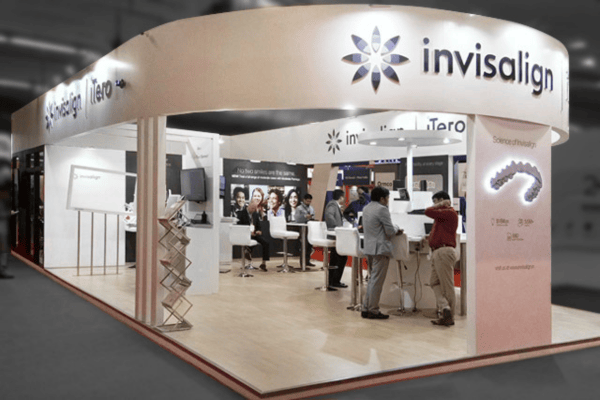
Open layouts and focused displays allow visitors to engage more naturally with the product instead of feeling lost in too much information.
In industrial sectors, clarity builds trust. A clean booth often communicates confidence better than a crowded one.
Rise of Immersive and Interactive Technologies
Industrial brands are increasingly adopting technologies like:
- Augmented reality
- Virtual simulations
- Interactive screens
These are not just for aesthetics. They solve a real problem.
Many industrial products are:
- Too large to display
- Too complex to explain verbally
- Too technical to visualize easily
Immersive technologies allow brands to simplify this complexity.
Interactive and technology-driven booths are becoming essential because they not only attract attention but also help visitors understand products more effectively.
Instead of explaining a process, you can let the visitor experience it.
Contextual Product Storytelling
Another major trend is showcasing products in context rather than isolation.
Instead of displaying a machine alone, brands are now creating environments that show:
- Where the product is used
- How it integrates into operations
- What outcomes it delivers
This approach helps visitors connect the product to their own business challenges.
Exhibitions are moving toward storytelling where booths are designed as real-world scenarios rather than product catalogs. For industrial buyers, this reduces the gap between understanding and decision-making.
Modular and Scalable Booth Design
Industrial companies often participate in multiple exhibitions across cities and countries. This has led to the rise of modular booth designs.
Modular booths allow:
- Easy reconfiguration
- Cost efficiency across multiple events
- Faster setup and teardown
- Consistent branding
Flexible and reconfigurable booth systems are becoming essential for brands that want to scale their exhibition presence without rebuilding from scratch every time.
For industrial brands, this is not just a design decision. It is a strategic one.
Sustainability as a Business Signal
Sustainability is no longer limited to consumer brands. It is becoming equally important in industrial sectors.
Exhibition booths are now being designed using:
- Reusable structures
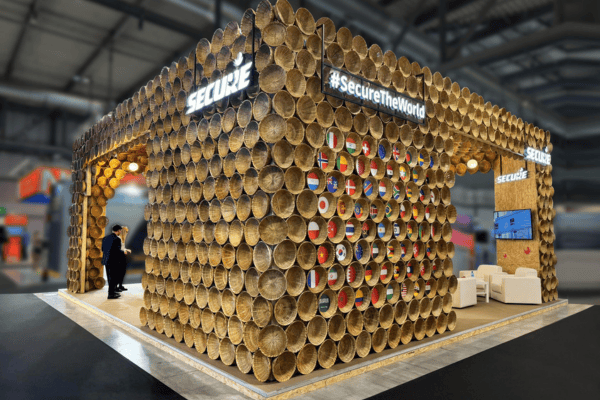
- Recyclable materials
- Energy-efficient lighting
This is not just about environmental responsibility. It also signals that your brand is forward-thinking and aligned with global standards.
Sustainable booth design has moved from being optional to becoming a core expectation in modern exhibitions.
Visitor-Centric Layouts Over Product-Centric Layouts
Traditional industrial booths were designed around products.
Now they are being designed around visitors.
This means:
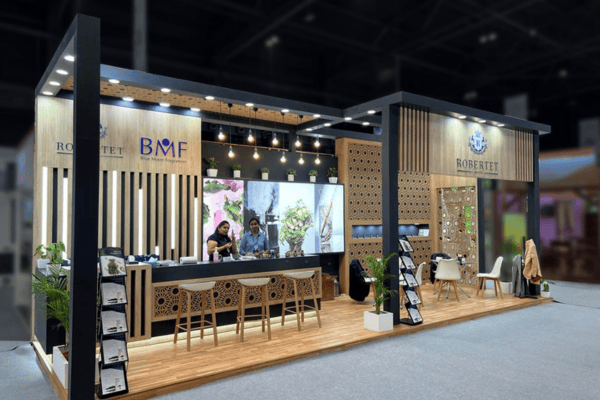
- Open entry points instead of closed walls
- Clear navigation paths
- Spaces for discussion and consultation
- Comfortable interaction zones
Visitor-centric layouts encourage longer conversations and deeper engagement. In industrial sales, where decisions are rarely instant, this shift plays a critical role in building relationships.
The Role of Movement and Visual Dynamics
Static booths struggle to capture attention in crowded exhibition environments.
Modern industrial booths are incorporating movement through:
- Kinetic displays
- Dynamic lighting
- Motion-based visuals
Movement naturally draws attention and guides visitors into the booth, making it more effective in high-competition environments.
For industrial brands, this is particularly important because their products may not be visually exciting at first glance.
Final Thoughts
Industrial exhibition design is no longer about showcasing products. It is about simplifying complexity and creating meaningful engagement. The brands that are succeeding are the ones that:
- Make technical solutions easy to understand
- Design for interaction, not just display
- Focus on visitor experience over product density
In a space where every competitor may offer similar capabilities, design becomes a powerful differentiator.
And in industrial exhibitions, clarity, credibility, and experience are what ultimately drive conversations that convert.